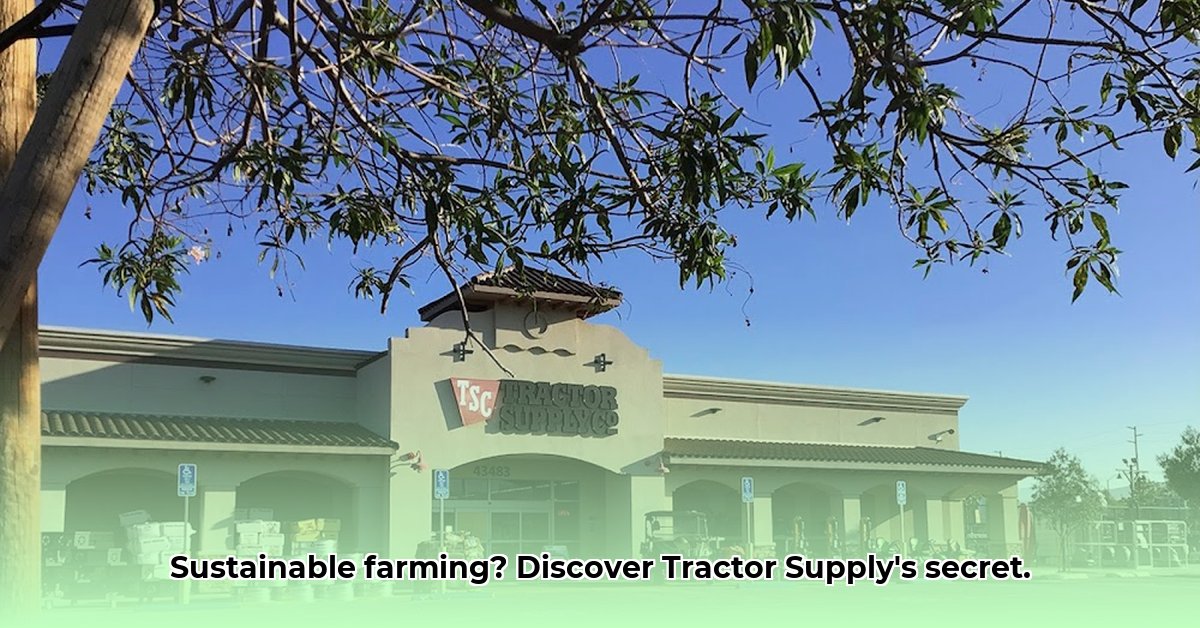
Tractor Supply American Canyon: A Community Hub for Sustainable Agriculture?
Tractor Supply Company (TSC) in American Canyon, California, serves as more than just a retail outlet; it's a vital resource for local farmers and gardeners. This article explores TSC's role in shaping sustainable agricultural practices within the American Canyon community, examining both the potential benefits and the complexities inherent in assessing its true impact. From providing essential supplies to influencing farming methods, TSC's influence is undeniable, but a complete understanding requires a nuanced look at its operations and community interactions. For information on water pumps, a critical resource for sustainable farming, see this page.
Does readily available access to supplies directly translate to sustainable practices? This is a crucial question, and the answer isn't always straightforward. While TSC offers a wide range of products that support sustainable agriculture—organic seeds, eco-friendly pest control, and water-efficient irrigation systems—the overall picture demands a more thorough examination.
Supporting Local Food Production: Seeds to Supper
The direct link between TSC and the local food system is clear. American Canyon farmers and home gardeners rely on the store for essential supplies, from heirloom tomato seeds to specialized fertilizers. This accessibility directly supports increased local food production. Reduced reliance on long-distance transportation, a key element of sustainable agriculture, is a tangible benefit stemming from this local sourcing. But how many farmers are actively choosing sustainable methods, and to what extent does TSC influence these choices? This requires more than just observing the available products; it requires a deeper understanding of farmer practices. This raises a key question: How much of TSC's sales directly support environmentally friendly farming techniques?
The Nuances of Sustainability: Beyond the Storefront
While TSC stocks numerous sustainable products, a comprehensive evaluation must extend beyond the products themselves. The environmental impact of the store's own operations and its supply chains demands scrutiny. Questions about responsible sourcing, manufacturing processes, energy consumption, and waste generation remain crucial and require further investigation. These are not easily answered, and a lack of readily available metrics makes a complete assessment challenging. We must also consider what we don't know to accurately gauge TSC's complete influence.
Unanswered Questions: The Need for Deeper Investigation
Currently, significant gaps in our understanding hinder a thorough assessment of TSC's impact. Critical areas requiring further research include:
Supply Chain Transparency: Complete transparency regarding the origin of products and their manufacturing processes is essential. Are suppliers adhering to ethical and environmentally friendly standards? Are there hidden environmental costs in the production and transportation of goods?
Environmental Footprint: A comprehensive assessment of the store's energy consumption, waste generation, and transportation emissions is crucial. This includes evaluating the entire lifecycle of products sold. What specific steps is TSC taking to minimize its environmental footprint?
Community Engagement: Direct engagement with farmers and gardeners utilizing TSC's products is vital. Their perspectives and experiences provide invaluable insights into the store's actual influence on their farming practices.
Paving a Path Towards a Greener Future: Collaboration is Key
Envisioning a scenario where TSC actively fosters sustainable agricultural practices in American Canyon is entirely achievable. This requires collaborative efforts, a commitment from TSC's management, local farmers, and community organizations. The following steps could significantly advance this goal:
Transparent Sustainability Reporting: TSC should publish detailed, transparent reports on its environmental impact, outlining sustainability goals and metrics. This builds credibility and accountability.
Community Workshops & Education: Partnering with local organizations to provide workshops and educational resources on sustainable farming practices can directly empower farmers and gardeners to adopt better methods.
Sustainable Product Promotion: Highlighting and promoting locally produced, organic goods within the store can incentivize farmers to embrace environmentally friendly practices. This also benefits consumers seeking sustainable options.
Incentive Programs: Implementing reward programs for sustainable practices, such as rebates for reusable containers or bulk purchases, can further support environmentally conscious choices.
Actionable Steps: A Collaborative Approach
The following table illustrates short-term and long-term goals for different stakeholders, outlining a framework for enhanced sustainability within the American Canyon agricultural community.
| Stakeholder | Short-Term Goals (0-1 year) | Long-Term Goals (3-5 years) |
|---|---|---|
| Tractor Supply Management | Implement a comprehensive sustainability audit of their supply chain. | Develop and implement a robust sustainability plan, including responsible sourcing, waste reduction, and carbon emission targets. |
| Local Farmers/Gardeners | Adopt more sustainable farming practices, utilizing eco-friendly products from TSC. | Actively participate in community-based sustainability initiatives; collaborate with TSC on educational programs. |
| American Canyon Community | Support local farmers and businesses committed to sustainable practices. | Advocate for policies supporting sustainable agriculture; increase participation in community gardens and educational programs. |
| Environmental Organizations | Provide expertise and support to TSC and local farmers on sustainability initiatives. | Collaborate on community outreach programs promoting ecological stewardship and sustainable farming practices. |
Conclusion: An Ongoing Story
Tractor Supply American Canyon's influence on sustainable agriculture within the local community is a complex and evolving narrative. While the store offers undeniable resources, a comprehensive and accurate assessment requires continued observation, transparent data sharing, and collaborative efforts from all stakeholders. The journey towards a more environmentally friendly agricultural system in American Canyon is an ongoing story that requires commitment and persistent engagement. The rewards, however, promise a healthier environment and more thriving community.